
Posted on

When I think of America…

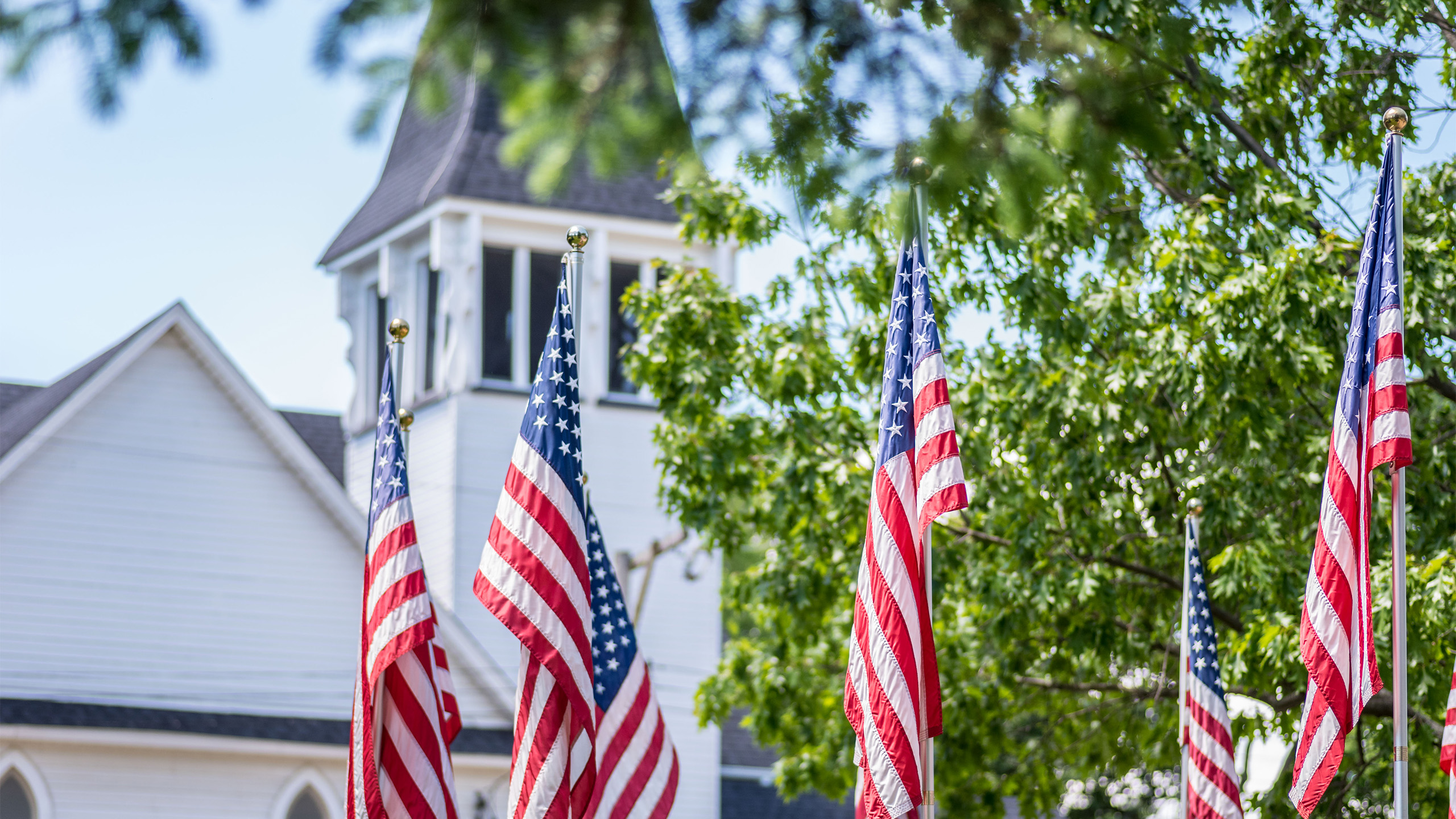
When I think of America, I think of a land birthed in liberty—liberty not only to speak and assemble, but liberty to worship the Lord without fear of government interference. Our Founding Fathers were not perfect men, but they understood a perfect truth: that all men are endowed by their Creator with certain unalienable rights. Chief among these is the right to worship freely.

We at the Christian Law Association are privileged to witness this freedom in action every day. We speak to pastors seeking to proclaim the Gospel boldly. We advise teachers disciplined for quietly living out their faith in public schools. We help Christian business owners who refuse to compromise their beliefs, even when it costs them financially. These believers are not making headlines—but they are the heartbeat of the American church.

And yet, we also see another side of America—one that grieves our hearts. We see government officials who treat churches unequally. We see Christians told to remove Scripture verses from their workspaces, students barred from bringing their Bibles to school, and ministries targeted for holding to Biblical truth. This is not the America our founders envisioned.

But we are not discouraged. We are resolved.

When I think of America, I think of Christians who still kneel in prayer, families who still gather around the dinner table to read God’s Word, churches who still preach the truth without compromise. I think of our attorneys—fighting daily, often behind the scenes, to ensure the next generation has the same religious freedoms we’ve enjoyed.

Our freedom is not free. It has been paid for by the blood of patriots—and by the sacrifice of those who stood for truth when it wasn’t popular. The Christian Law Association stands with them.

Let us not take these freedoms for granted. Let us continue to speak, to serve, and to stand. Let us remember that this liberty is not man’s idea—it is God’s gift. And with His help, we will preserve it.

Posted on

Defending Religious Liberty at Work

About two years ago, an employee in the medical industry worked within the rules of his company to establish a Bible study with some of his fellow employees. This, however, was strongly opposed by some of his superiors, and they began to develop a plan to shut down the Bible study.

Without any notice and without being given any reason, the employee was sent home. Because he knew his bosses well, he knew that—regardless of what anyone might state publicly—the real reason for this was their desire to disband the Bible study. He also knew that he would likely lose his job.

When he contacted the Christian Law Association, our experienced attorneys were able to provide sound legal guidance. After all this time, the Bible study is still going. One man who attends the Bible study has now become a Christian.

Because of God’s goodness, the man who operates the Bible study still has a career that is on track. In fact, it appears that his superiors can perceive the value of his work, and they have even continued to provide him with customary increases of salary.

The Christian Law Association is committed to fighting for religious liberty. Whether that is handling cases that appear before the highest courts of the land or helping a good-hearted Christian man keep his Bible study going, we are privileged to defend the rights of Bible-believing Christians.

Posted on

America Needs Churches

If we take the time to look around, it is obvious that the attendance in many churches is lower today than it was a year ago. This downward trajectory is not associated with just one church; it is unfortunately a part of a growing trend in all churches across America.

We have all felt the impact of rising prices, and churches are no different. In many congregations, the financial challenges are severe. Expenses are going up, but offerings are going down.

When the COVID-19 panic hit, many faithful church members stayed home, planning for that to be only for a season. Sadly, many of them have never returned. That—coupled with shifting trends in many people’s attitude about organized religion—is another contributing factor to the current weakened state of church growth.

The statistics for 2024 are not complete, but reasonable estimates indicate that somewhere between 4,000 and 10,000 churches closed their doors permanently during the year. Going back to 2019, statistics about Protestant churches indicated approximately 4,500 closures that year. It is common for churches to close or to merge because church attendance in America is in trouble.

America needs churches! America needs you to keep your church strong!

At the Christian Law Association, it is our privilege to fight to protect the religious liberties of Bible-preaching churches. At the same time, we understand that all the well-intentioned efforts of our legal missionaries cannot replace dedicated pastors and church members who have a heart to keep the New Testament church alive in this nation.

This is the time to support your local church. This is the time to be involved, to contribute, to participate in outreach. The message of the Gospel makes an eternal difference. May the Lord help us rededicate ourselves to support the church which He bought with the precious blood of Christ.

Posted on

10 Tips for a Great Summer

When summertime arrives, churches kick into high gear. Activities, camps, special programs—all these projects can excite the membership and keep the staff extremely busy. As you enter into this joyous, but hectic, season, keep these tips in mind to stay safe and legally sound.

 1. Review and Update Insurance Coverage

Make sure your liability insurance is current and covers all summer activities, including off-site events, camps, and volunteer-led outings.

 2. Require Signed Permission and Waiver Forms

Get signed consent and liability waivers from parents/guardians for minors participating in events. Clearly outline the activities and any associated risks.

 3. Screen All Volunteers and Staff

Conduct background checks on anyone working with children or youth. Document the process to protect the church legally if an issue arises.

 4. Provide Staff & Volunteer Training

Offer mandatory safety training, including child protection policies, emergency procedures, and mandatory reporting obligations.

 5. Comply with State and Local Laws

Ensure activities meet all local, state, and federal legal requirements (like permits for large gatherings, food service regulations, and transportation rules).

  6. Implement a Two-Adult Rule

Never allow one adult to be alone with a minor. Always have two unrelated adults present to protect everyone involved.

  7. Prepare Emergency Medical Plans

Have clear emergency procedures. Keep medical release forms and allergy information on hand, and ensure first-aid kits are available at every event.

  8. Transport Minors Safely and Legally

Use approved drivers with valid licenses and proper insurance. Get written permission for any off-site transportation.

  9. Monitor Outdoor and Water Activities Closely

For activities like swimming or hiking, use certified lifeguards or qualified supervisors, and have clear supervision ratios based on age and activity risk.

 10. Document Everything

Keep thorough records of incident reports, permission slips, training sessions, and background checks. Good documentation can be crucial if any legal issues arise later.

Taking a little extra time to tend to these matters is an important step in safeguarding the many activities on your summer schedule. If you need additional information or have questions, please contact our offices.

Posted on

Wisdom

1. Wisdom is the principal thing (Proverbs 4:7).

When God told King Solomon to ask for anything he wanted, Solomon asked for wisdom (2 Chronicles 1:7–12). Living in the shadow of his father, King David, he asked for the one thing that really touched the heart of God, Heaven-sent wisdom. When God saw that Solomon’s heart was filled with a desire for wisdom, He gave him the wisdom he asked for, as well as extreme riches that he did not ask for.

2. Do not confuse wisdom with knowledge.

Knowledge is “knowing things”; wisdom is “knowing what to do and when to do it.” We have all met people who are extremely intelligent, but the actions of their day-to-day lives are extremely foolish. It is impossible to navigate the Christian life without knowing what to do and when to do it. We cannot be successful spouses, parents, employers, or employees without having this wisdom. We can rely on our own best efforts, or we can rely on God’s magnificent wisdom.

3. Wisdom brings happiness.

Proverbs 3:13–15 explains, “Happy is the man that findeth wisdom.” If you want to be happy, you need to obtain Heaven-sent wisdom. Given the choice between wealth and wisdom, always choose wisdom. Seeking happiness by following the way of the world is a catastrophic choice. True happiness is found only by seeking divine wisdom and living the lives God has designed for us.

4. We must acknowledge that we lack wisdom.

James 1:5 says, “If any of you lack wisdom, let him ask.” The word lack here means “to be destitute,” not “to be just a little short.” We must be honest with ourselves and with God. We must admit that we simply do not know how to raise our children or manage our careers without God’s divine help. In most cases, people who are highly talented, gifted, or experienced have even more trouble asking for God’s help. Our prayer must be, “God, I admit that I lack. I must have Your wisdom because I do not know what I am doing.” While the world encourages us to believe in ourselves and trust in what we can make of ourselves, God’s Word commands us to humble ourselves under the mighty hand of God, thereby acknowledging our lack (1 Peter 5:6). We must never get comfortable living without Heaven-sent wisdom.

5. We must ask God for wisdom.

When we ask God for wisdom, God promises to give us a generous portion of it. He will give us even more wisdom than we need. Furthermore, God promises that He will never find fault with us for asking for wisdom. He will never say, “You seem weak for asking.” We should ask God to give us wisdom for the specific situations we encounter day by day. In every situation of life that we encounter, we should ask ourselves, “Do I care enough about this to ask God for His help?”

6. We must exercise faith when we ask for 

                wisdom.

In salvation, we exercise faith and ask God to save us. In our day-to-day lives, we must exercise faith in asking God for wisdom. We can’t be fickle, thinking, “Maybe God will give me wisdom; maybe He won’t.” That kind of thinking is unstable. Stable, Bible-based thinking is remembering that we are part of God’s family, and our loving Heavenly Father wants to give us wisdom. It is tragic for a wife to look for leadership from an unstable husband who is not asking God for wisdom, or for a child to seek guidance from a parent who is comfortable living without God’s wisdom.

7. Wisdom impacts our daily lives.

When we choose to seek God’s wisdom, it improves our relationships. Heaven-sent wisdom makes us better parents, better children, better employers, and better employees. When we are filled with God’s wisdom, our actions will manifest the fruit of the Spirit, “Love, joy, peace, longsuffering, gentleness, goodness, faith, meekness, temperance: against such there is no law” (Galatians 5:22–23).

Christian, have you asked your 

Heavenly Father for wisdom today?

Posted on

10 Tips for a Successful Vacation Bible School

1. Clear Registration Process

Policy: Ensure that all children attending VBS are registered in advance. This helps with planning, class sizes, and the allocation of resources. Include consent forms for medical emergencies, permission for photography, and emergency contacts.

Tip: Create an online registration system for ease of access, while also allowing in-person sign-ups.

2. Age Group Guidelines

•    Policy: Define clear age groupings for VBS classes, ensuring that children are placed in the appropriate age groups (e.g., preschool, elementary, etc.). This promotes age-appropriate lessons and activities.

•    Tip: Use age-based groupings to ensure safety and age-appropriate activities.

3. Volunteer Screening and Training

Policy: Require all VBS volunteers to undergo background checks and training before interacting with children. This includes safety procedures, child protection policies, and first-aid basics.

Tip: Provide a volunteer handbook with roles, expectations, and guidelines for working with children.

4. Safety and Supervision

•    Policy: Maintain a clear child-to-adult supervision ratio to ensure safety. Always have more than one adult present in classrooms and activity areas, and ensure that volunteers are stationed at entry and exit points.

•    Tip: Institute a “Two-Adult Rule,” meaning that no volunteer should be alone with a child.

5. Medical and Allergy Information

• Policy: Collect and maintain medical information for each child, including any allergies, medications, or special needs. Ensure that volunteers are aware of these details for safety purposes.

Tip: Have a designated person responsible for overseeing and administering any medications during VBS.

6. Drop-off and Pick-up Procedures

Policy: Establish strict drop-off and pick-up procedures, ensuring that children are released only to authorized adults. Use a check-in/check-out system with identification verification.

•    Tip: Consider assigning pick-up tags to parents or guardians for added security.

7. Discipline and Behavior Guidelines

Policy: Set clear expectations for behavior and discipline, emphasizing a positive, respectful, and loving environment. Establish procedures for dealing with disruptive or inappropriate behavior.

•    Tip: Use a positive reinforcement approach to encourage good behavior, and have a plan for addressing behavioral issues respectfully.

8. Emergency Procedures

•    Policy: Create detailed emergency procedures for various situations, including medical emergencies, natural disasters, fire drills, and other safety issues. Ensure that all volunteers are familiar with these protocols.

•    Tip: Regularly review and practice emergency drills to ensure everyone knows how to respond in case of an emergency.

9. Inclusive Participation

Policy: Ensure that VBS is open to all children. Provide accommodations or special assistance for children with physical, emotional, or developmental needs.

Tip: Communicate with parents ahead of time if their child may need special accommodations, and plan accordingly.

10. Parent Communication and Engagement

•    Policy: Keep parents informed of VBS activities, themes, and any special events through newsletters, emails, or social media updates. Encourage parental involvement and participation, and ensure parents are aware of any relevant VBS policies.

•    Tip: Consider hosting a “parent night” at the end of VBS week, where children can showcase what they’ve learned and made.  This is an excellent time to introduce new families to your ministry.

By using these policies, you can create a safe, organized, and enjoyable VBS experience for both children and volunteers. Clear communication, safety measures, and well-defined roles are essential to running a successful program.

Posted on

Reaching the World

Our ministry recently had the privilege to legally assist some missionaries who had some unusual issues. Helping others remove legal red tape to take advantage of every opportunity to reach the world for Christ is our calling. These missionaries had a reputation of reaching dozens of people for Christ in their city each week, but they were in danger of being pulled off the field. We could not let that happen. Each individual you meet has an eternal destination. Every missionary, pastor, and, yes, every Christian has a mandate from God to tell others about the good news of the Gospel. 

Each week, our legal missionaries travel for legal meetings, court hearings, and depositions. As we travel, we have the unique opportunity of handing out Gospel tracts to strangers in airports, on airplanes, in restaurants, and many other places around the country. Because of what we get to do for the Lord, we can serve others who are being hindered from sharing the Gospel in the same manner. God’s Word will never return void, and it will plant a seed for someone to reap. God has a plan, and it includes every person taking the initiative to speak about Christ. 

We are also in many churches and conferences throughout the year that inform others of how we can help. Your legal right to witness is paramount to God’s plan for your life.

What can you do today? Take a moment when you stop for a meal or drive through a fueling station to hand the worker a Gospel tract and introduce that person to your Savior. We have tracts available that you can use if you need some. The Gospel is good news, and it is the best news anyone can ever hear! 

If you are a pastor, think about putting the Gospel on your website if it is not already there, and make your address and phone number easy to see so that anyone can easily find you if they have questions.

If you are a believer, you can be the wisest person in your area. The Scriptures reveal that “He that winneth souls is wise.” With the most careful thought, let us also remind ourselves of the reverse: God is telling us that it is unwise for us not to win souls. Ask God for wisdom, and He will give you the boldness to win souls. 

If you have questions about how to take the first steps in reaching out to others about Christ, speak with your pastor. He will guide you through the process and be glad to teach you. You can also reach out to us here at the Christian Law Association, and we will be glad to help however we can.

Posted on

Are You a Second-Mile Christian

The Meaning of Going the “Second Mile”

In Jesus’ time, a Roman soldier could compel a person to carry their equipment for one mile. This was a form of legal obligation, and it was something that could easily be resented. Jesus’ command to go a second mile was radical, as it encouraged believers to go beyond mere duty and show extraordinary generosity and willingness. Going the “second mile” signifies going above and beyond in both acts of service and in our attitudes towards others.

Serving with a Christlike Attitude

Going the second mile isn’t just about doing more but doing so with the right heart and attitude. Believers need to view acts of service, no matter how small or inconvenient, as opportunities to reflect Christ’s love and humility. Rather than begrudgingly fulfilling obligations, Christians should joyfully seek to serve others and show kindness beyond what is expected.

Demonstrating Unconditional Love 

The second-mile principle also applies to relationships, especially when others are difficult to love or when the situation feels unfair. By choosing to go the second mile, Christians are demonstrating unconditional love—love that isn’t based on how others treat us but on how Christ has loved us. This challenges the idea of loving only those who love us back, instead calling believers to extend love and grace even in difficult situations.

The Impact of Going the Extra Mile 

Going the second mile has the potential to make a powerful impact on others. When Christians go beyond expectations, they stand out in a world that often values self-interest and convenience over selflessness. This can be a powerful witness to the world about the love and character of Christ.

Christ as Our Example

Jesus Himself is the ultimate example of going the second mile. Jesus went far beyond what was required in His sacrifice on the cross for humanity. His willingness to lay down His life for others is the model for Christians to follow in their own lives.

A Call to Action 

Will you go the second mile? Christians need to actively seek opportunities to go the second mile in their daily lives. Whether in relationships, work, or service to the church and community, believers should look for ways to exceed expectations and serve with a heart of love and humility.

Being a “Second-Mile Christian” is a call for believers to go beyond what is required or expected in their Christian walk. It’s about offering extra service, demonstrating love, and reflecting Christ’s heart in a world that needs it most.

Posted on

The Two Adult Rule

We cannot stress enough the importance of making sure that no church worker is ever alone with a child.  No policy is more important or more effective in preventing tragedy than this, and church leaders must be certain workers comply with the requirement. Every child deserves to be safe in his own church building. In addition, non-compliance leaves both church and workers open to false accusations that could bankrupt the church.

Based on our decades of legal experience, the importance of both having and following the two-adult rule without exception cannot be overemphasized.

Posted on

Do All Churches Need an EIN?

We often receive questions about the best way to form churches—whether or not to incorporate, whether or not to be a non-profit, etc. Regardless of what a church decides in those areas, one point that isn’t up for debate is the EIN. Every church needs an Employer Identification Number (EIN) from the Internal Revenue Service.

  In order to open a bank account in a church’s name, an EIN is needed. Of course, church funds and personal funds should never be comingled in one bank account. The EIN is also needed to file tax documents and to conduct financial dealings with businesses. You will even need an EIN if you wish to send bulk mailings through the 

post office.

  To obtain your EIN, file IRS Form SS-4 Application for Employer Identification Number. You should retain a copy of this form for your records. Once you receive your EIN, keep that number easily accessible because your ministry will use it frequently.